For centuries, hair has been treated with care, ritual and meaning.
The Celts associated hair with personal power and identity. It was part of who you were. Roman author Pliny the Elder spoke of their profound knowledge of plants, and writers of that time describe Celts applying botanical oils to their skin and hair as part of everyday ritual.
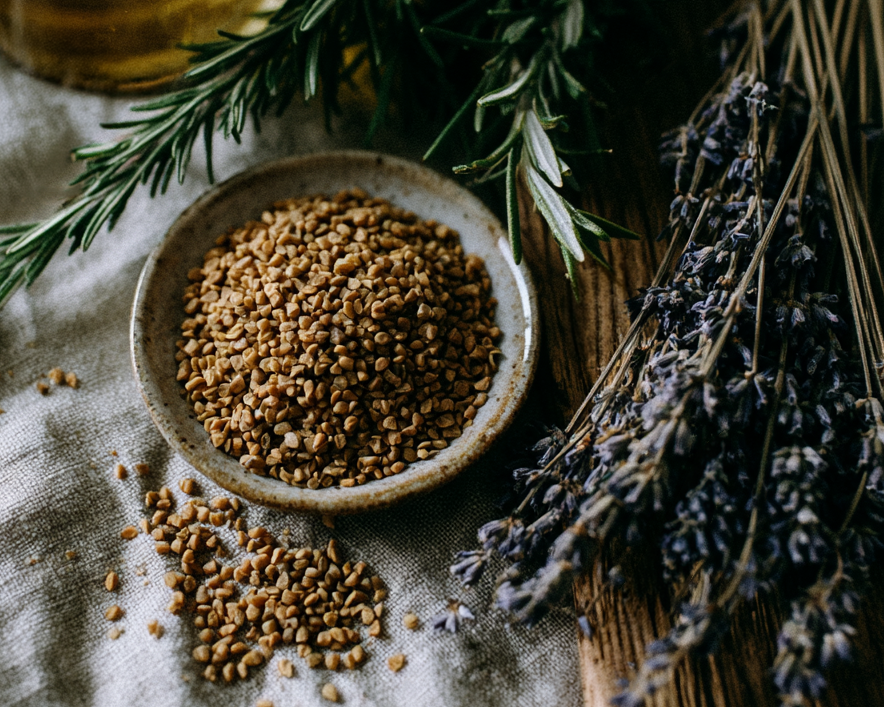
Olive oil in the Mediterranean was more than just food. Greeks and Romans massaged it into the hair and scalp to strengthen the roots and add shine, often infusing it with rosemary and lavender to balance the scalp.
In Ancient Egypt, botanical care was equally embedded in daily life. The Ebers Papyrus, a medical text from 1550 BC, details the use of castor oil and fenugreek among its herbal remedies. Fenugreek seeds were even found in the tomb of Tutankhamun.
Many cultures saw hair as a representation of inner balance and overall wellbeing. This was the result of living closely with nature. Before labs or clinical trials existed, people discovered what worked by paying attention and sharing what they knew. Every plant was carefully selected and they took their time, from the preparation to putting oils or pastes on the scalp.
What's remarkable is how people separated by continents and centuries all landed on similar ideas. The same understanding kept emerging: natural oils nourish the hair and scalp, massage is important, and hair responds to simple, steady care. This knowledge was acquired through observation and repetition, passed between people who paid close attention to what their bodies needed.
Modern science has provided us with the language to express what those traditions already knew. Now we can talk about the fatty acids in oils, the circulation support of certain herbs, and why plant compounds work in ways that synthetics cannot. But it’s not one versus the other. Old-world practice and modern research are often talking about the same thing.
Somewhere along the way, many of us stopped paying attention to nature and ourselves. But we haven’t lost our connection to this kind of botanical care, it’s still here if we want it. At Nymara, we believe inherited wisdom and modern understanding belong together. They remind us that the most thoughtful hair care isn't about excess or extremes, it's about simplicity, intention, and the rituals we build and return to.